
Have you ever wondered why some VPNs slow your internet down while others seem lightning fast? The secret often lies in something called smart routing. This clever technology is quietly revolutionizing how Virtual Private Networks (VPNs) handle data—making your connection faster, smoother, and more reliable.
Let’s take a closer look at how smart routing boosts your VPN speed, why it matters, and how you can use it to make every connection feel like you’re browsing without a VPN at all.
What Is Smart Routing in a VPN?
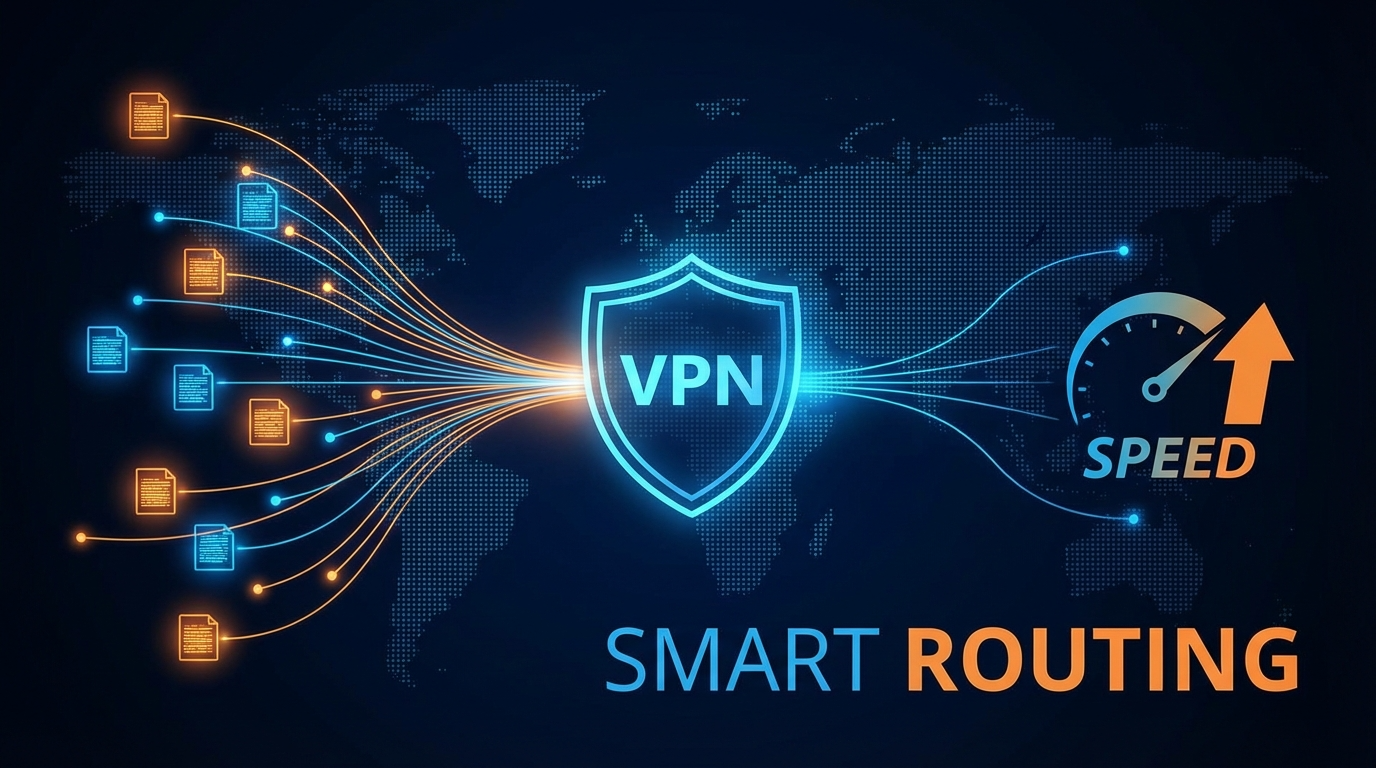
Smart routing is an intelligent network optimization technique used by advanced VPNs to enhance speed and reliability. Instead of sending all your internet traffic through a single static path, smart routing dynamically selects the best possible route for your data packets based on current network conditions.
Think of it as your GPS for internet traffic—it checks for roadblocks (like congestion or latency), finds the clearest lane, and gets your data to its destination faster. Traditional VPNs often route data through fixed servers, even when those servers are overloaded or far away. Smart routing eliminates that inefficiency.
It does this by analyzing multiple factors in real time:
- Server distance
- Network congestion
- Packet loss rates
- Connection stability
- Real-time ping and throughput
By continuously evaluating these elements, smart routing ensures you get the best available speed without sacrificing encryption or privacy.
How Smart Routing Boosts VPN Speed
When you use a VPN, your data travels through encrypted tunnels between your device and the VPN server. While this provides privacy, it can slow down your connection. Smart routing solves that slowdown problem by optimizing the route at every step.
Here’s how it enhances VPN speed in practical terms:
1. Dynamic Server Selection
Instead of locking you into a single server, smart routing automatically switches to a faster one if the current connection slows down. For instance, if the Los Angeles server becomes overloaded, the system might seamlessly reroute your data through San Francisco or even a nearby international hub with less congestion.
This adjustment happens instantly, often without you noticing any disruption.
2. Reduced Latency for Streaming and Gaming
Latency, or the delay between sending and receiving data, is every gamer’s nightmare. Smart routing minimizes latency by avoiding congested or long-distance routes. That’s why VPNs with smart routing are popular among streamers and competitive gamers—they can connect through optimized servers close to game or media servers, ensuring lower ping and smoother experiences.
3. Split Tunneling Integration
Many VPNs with smart routing combine this technology with split tunneling. This means your data isn’t forced to travel through the VPN when it doesn’t need to. For example, your local banking app might use a direct route while your streaming traffic gets smartly routed through a faster encrypted path. This balance reduces load and speeds up performance.
4. Intelligent Load Balancing
Smart routing uses algorithms that distribute user traffic evenly across multiple servers. This prevents overcrowding and keeps performance consistent. When one route gets busy, the system reroutes data to less congested alternatives, keeping speeds stable even during peak usage hours.
5. Real-Time Optimization
Networks fluctuate constantly—what’s fast now may be slower a minute later. Smart routing systems monitor these changes and dynamically adjust routes in real time. It’s like having a network assistant constantly fine-tuning your path for top speed.
Why Smart Routing Matters for VPN Users
Without smart routing, VPN users often face slower speeds and unstable connections. That’s because traditional VPNs follow static routing protocols, where every packet travels the same path regardless of changing conditions.
By contrast, smart routing introduces adaptability. It ensures:
- Better consistency: Fewer connection drops or timeouts.
- Higher throughput: Data reaches destinations faster.
- Enhanced streaming quality: Less buffering and resolution drops.
- Optimized security-performance balance: You stay protected without noticeable lag.
If you frequently stream content, work remotely, or use cloud-based applications, this technology can make a big difference in your daily experience.
The Technology Behind Smart Routing
At its core, smart routing relies on machine learning and advanced algorithms that analyze large volumes of network data. These systems evaluate metrics such as packet travel time, loss percentage, and server response speeds.
Once the data is analyzed, the system automatically determines:
- The shortest or least congested path to your destination.
- Whether encryption layers are affecting performance.
- When to reroute traffic to optimize latency and throughput.
In some advanced VPNs, smart routing even integrates AI prediction models to anticipate congestion before it happens, preemptively switching to alternate routes.
Smart Routing vs Regular Routing
It helps to visualize the difference. Traditional routing is like a train following one track from start to finish, even if there’s a delay ahead. Smart routing, on the other hand, is like a self-driving car that constantly analyzes all available roads and changes lanes when traffic builds up.
Here’s what sets them apart:
| Aspect | Regular Routing | Smart Routing |
|---|---|---|
| Path Type | Fixed, predefined | Dynamic, adaptive |
| Speed | Often slower | Optimized for real-time conditions |
| Latency | Higher | Lower due to route optimization |
| Reliability | Can drop or lag | More stable and consistent |
| Resource Efficiency | Limited | Efficient load balancing |
In short, smart routing adapts. It’s responsive, intelligent, and optimized for modern internet demands.
How Smart Routing Enhances Streaming and Downloads
If you’ve ever tried streaming Netflix or downloading large files through a VPN and felt frustrated by buffering or slow progress bars, smart routing is your solution.
By connecting you to the fastest available node, smart routing ensures your packets take the shortest path possible. This directly improves your streaming speed and reduces the chance of stutter or lag during playback.
Moreover, smart routing often helps bypass throttling. Some ISPs slow down VPN traffic. By dynamically changing routes and endpoints, a smart routing VPN can avoid these slow lanes, maintaining your download speed.
Choosing a VPN with Smart Routing
Not all VPNs include smart routing. If speed and reliability matter to you, look for these features in your VPN provider:
- Dynamic server optimization that adjusts routes in real time.
- Integrated load balancing to prevent overcrowded servers.
- Low-latency infrastructure with multiple data centers worldwide.
- Custom protocols like WireGuard or proprietary ones optimized for routing efficiency.
Popular VPNs such as NordVPN, ExpressVPN, and Surfshark have introduced variations of smart routing technologies, often under names like “Smart Connect,” “TrustedServer,” or “Dynamic Path Optimization.”
How to Maximize Smart Routing Benefits
Smart routing works automatically, but you can enhance its impact with a few strategies:
- Choose nearby servers. Even with smart routing, closer servers often yield faster results.
- Use high-speed protocols. WireGuard and Lightway are designed for modern routing performance.
- Restart connections occasionally. This lets the system re-evaluate your optimal route.
- Avoid peak hours. Less congestion means smarter routing decisions.
- Enable split tunneling. Direct non-essential apps outside the VPN for better speed balance.
These small tweaks can make a noticeable difference in your overall experience.
The Future of Smart Routing in VPNs
As global data demand grows, VPNs will increasingly rely on smart routing systems. Future versions will integrate even deeper AI-driven optimization, using predictive analytics to forecast congestion and automatically choose the best routes before users even notice a slowdown.
We may soon see VPNs capable of learning your usage patterns—prioritizing streaming routes in the evening and work routes during the day. The goal is seamless speed, privacy, and adaptability rolled into one experience.
Final Thoughts: The Power of Smart Routing
Smart routing is transforming how VPNs deliver performance. By intelligently selecting the fastest and most stable routes, it eliminates many of the frustrations users associate with slow connections. Whether you’re gaming, streaming, or simply browsing securely, a VPN with smart routing technology ensures that your data travels efficiently without compromising privacy.
So next time you notice your VPN running smoothly, remember—it’s not magic. It’s smart routing doing its job behind the scenes.
FAQ
1. What is smart routing in VPNs?
Smart routing is a technology that dynamically selects the best network route for your VPN traffic based on factors like latency, server load, and distance. It helps improve connection speed and stability.
2. Does smart routing affect VPN security?
No, smart routing maintains encryption and privacy. It only optimizes how your data travels, not how it’s encrypted.
3. Is smart routing available on all VPNs?
Not all VPNs offer this feature. It’s usually found in premium VPNs that invest in performance optimization and global infrastructure.
4. Can smart routing help with streaming services like Netflix?
Yes, smart routing can improve streaming quality by reducing buffering and connecting you to optimized servers near streaming content hubs.
5. How can I tell if my VPN uses smart routing?
Check your VPN provider’s website or app settings for terms like “Smart Connect,” “Dynamic Path Optimization,” or “Optimized Routing.” These typically indicate smart routing technology.