
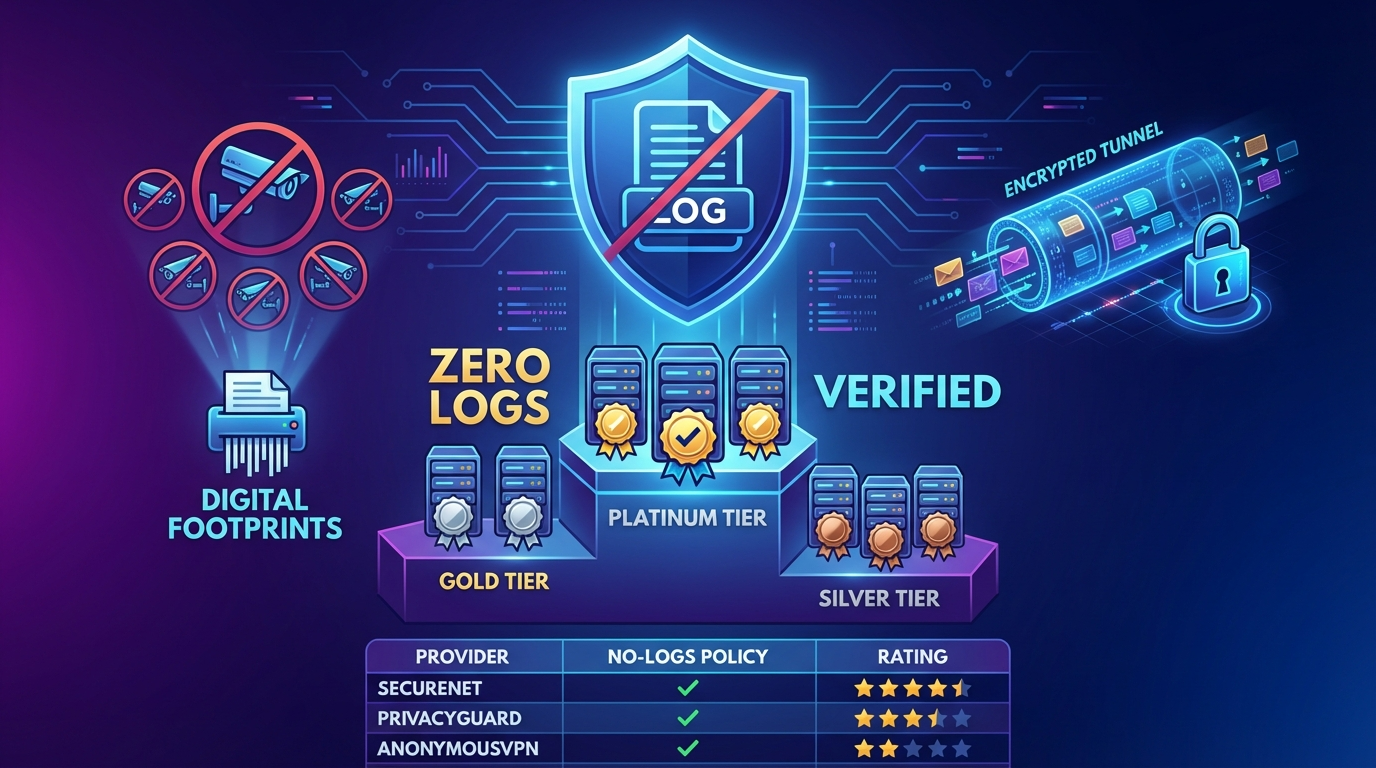
The phrase “no-logs” sounds comforting. It suggests invisibility. It promises that your browsing history disappears into thin air. However, not every provider that claims privacy actually delivers it.
That’s why understanding the best no-logs VPNs matters more than ever. If you care about digital privacy, you cannot rely on slogans alone. You need evidence. You need transparency. And most importantly, you need to know who truly stands behind their promises.
So, who really delivers on privacy? Let’s examine what makes the best no-logs VPNs trustworthy and how to separate marketing hype from genuine protection.
What No-Logs Really Means in the Best No-Logs VPNs
At first glance, “no-logs” seems straightforward. A provider does not store your activity. Simple, right?
Not quite.
In reality, logging policies vary widely. Some VPNs avoid storing browsing history but still collect connection timestamps. Others may track bandwidth usage. While this information may appear harmless, it can sometimes be used to identify patterns.
Therefore, the best no-logs VPNs go further. They avoid recording browsing data, IP addresses, DNS queries, and session details. In short, your activity should not be stored in a way that links back to you.
Additionally, privacy policies must be written clearly. Vague language creates doubt. Transparent documentation builds trust.
When reviewing providers, always read the privacy policy carefully. If the wording feels confusing, it probably is.
Independent Audits and Transparency Reports
Claims alone are not enough. The best no-logs VPNs back their policies with independent audits.
An audit is conducted by a third-party cybersecurity firm. These firms examine server infrastructure, logging systems, and data storage practices. If the provider passes, it means no identifiable logs were found.
Moreover, transparency reports strengthen credibility. These reports show how many data requests were received from governments or authorities. Ideally, the answer should be zero usable records.
For example, when a provider has undergone multiple audits, confidence increases. External validation carries weight. After all, privacy should be proven, not simply promised.
Jurisdiction and Legal Environment
Location matters. Even the best no-logs VPNs operate within legal frameworks.
Some countries enforce mandatory data retention laws. Others belong to intelligence-sharing alliances. These environments may increase pressure on service providers.
However, a strong no-logs policy reduces risk significantly. If no user activity is stored, nothing meaningful can be handed over.
Still, it is wise to examine where a VPN company is headquartered. Countries with privacy-friendly regulations often provide an additional layer of reassurance.
Although jurisdiction plays a role, logging practices remain more important. A truly log-free infrastructure offers stronger protection than location alone.
Server Infrastructure and RAM-Only Technology
One reason the best no-logs VPNs stand out is their use of RAM-only servers.
Traditional servers store data on hard drives. Even temporary logs may remain until manually erased. In contrast, RAM-only servers wipe all information automatically with every reboot.
This approach significantly reduces risk. Since data is not written to disk, it cannot be retrieved later.
Furthermore, many top providers operate their own servers rather than renting them. This limits third-party access and enhances control over security protocols.
Infrastructure design reveals commitment. If a company invests heavily in privacy-focused technology, it likely takes its no-logs policy seriously.
Encryption Standards in the Best No-Logs VPNs
Strong encryption is essential. Without it, even a no-logs promise loses meaning.
The best no-logs VPNs typically use AES-256 encryption. This level of security is considered military-grade. In addition, modern protocols like WireGuard and OpenVPN are commonly offered.
Encryption ensures that data cannot be read by outsiders. Even if traffic is intercepted, it remains scrambled and useless.
Moreover, many privacy-focused providers include extra safeguards. These may include:
- Kill switch functionality
- DNS leak protection
- Split tunneling
- Multi-hop connections
When testing a VPN, verify these features carefully. Protection should remain active at all times.
Real-World Cases That Prove No-Logs Claims
Trust grows when policies are tested in real-world scenarios.
Several of the best no-logs VPNs have faced government data requests. In certain cases, servers were even seized. However, because no logs were stored, no user information was obtained.
These situations demonstrate integrity under pressure. It is one thing to advertise privacy. It is another to withstand scrutiny.
When evaluating providers, look for documented examples. Evidence of proven resilience strengthens credibility significantly.
Performance and Privacy Balance
Privacy is essential. However, performance matters too.
The best no-logs VPNs combine strong privacy practices with fast speeds and reliable connections. After all, a secure service that constantly buffers or disconnects becomes frustrating.
Fortunately, modern VPN technology allows both speed and security. Lightweight protocols maintain encryption without sacrificing performance.
Additionally, extensive server networks reduce congestion. This improves streaming quality and download rates.
While privacy remains the priority, usability should not be ignored.
Streaming and P2P Support
Many users explore the best no-logs VPNs for streaming or file sharing. Privacy matters, yet functionality also plays a role.
Reputable providers typically support streaming platforms across multiple regions. In addition, P2P traffic is often permitted on designated servers.
However, you should always review terms carefully. Some providers restrict torrenting in certain countries.
If streaming or file sharing is part of your routine, test performance thoroughly during any trial or refund window.
Customer Support and Transparency
Privacy-focused companies often maintain open communication.
The best no-logs VPNs provide clear FAQs, detailed knowledge bases, and responsive support teams. If you have questions about logging policies, answers should be direct.
Additionally, many providers publish regular security updates. Transparency builds confidence over time.
If customer support avoids questions about data collection, that may signal caution.
Comparing the Best No-Logs VPNs
While specific brands may vary, several characteristics consistently define the best no-logs VPNs:
- Independently audited no-logs policies
- RAM-only server infrastructure
- Strong encryption standards
- Clear privacy documentation
- Transparent jurisdiction details
- Reliable performance
When comparing options, focus on these criteria. Marketing claims can sound similar. However, structural differences reveal true commitment.
Moreover, avoid providers that offer permanently free services without clear revenue models. Privacy cannot be maintained if the business model depends on data monetization.
How to Verify No-Logs Claims Yourself
Although audits and reports help, you can also perform your own checks.
First, read the privacy policy carefully. Look for phrases such as “connection logs” or “diagnostic data.” Clarify what is collected and why.
Second, research past news coverage. Have there been data breaches or controversies?
Third, test DNS leak protection using online tools. Ensure your real IP remains hidden.
Finally, examine payment options. Anonymous payment methods like cryptocurrency can enhance privacy further.
Although you cannot inspect internal servers directly, informed research strengthens your decision.
Are the Best No-Logs VPNs Worth the Investment?
Quality privacy requires infrastructure, audits, and technical expertise. Therefore, the best no-logs VPNs often come with subscription fees.
However, the cost is usually modest compared to the value of digital privacy. Consider how much of your personal data moves online daily. Browsing history, financial transactions, and communications deserve protection.
While cheaper services may tempt you, compromised privacy can carry higher costs.
In most cases, investing in a reputable no-logs VPN provides peace of mind. That confidence is difficult to measure yet invaluable.
Conclusion: Who Truly Delivers on Privacy?
The best no-logs VPNs deliver more than promises.
When evaluating options, focus on evidence rather than marketing language. Examine audits. Review jurisdiction. Test security tools. Assess infrastructure.
Ultimately, true privacy is built on trust reinforced by proof. Choose a provider that demonstrates integrity consistently. When you do, your online activity remains yours alone, protected not by slogans but by solid technology and transparent practices.
FAQs
- What does no-logs mean in a VPN?
It means the provider does not store your browsing history, IP address, or identifiable session data. - Are audited VPNs safer?
Yes, independent audits verify that logging policies are implemented correctly, increasing trust. - Does jurisdiction affect privacy?
Yes, legal environments vary. However, strong no-logs practices often matter more than location alone. - Can no-logs VPNs still see my activity?
With proper encryption and policies, your activity is not recorded or stored by the provider. - Are free VPNs usually no-logs?
Many free services log some data to support their business model. Always review policies carefully.