
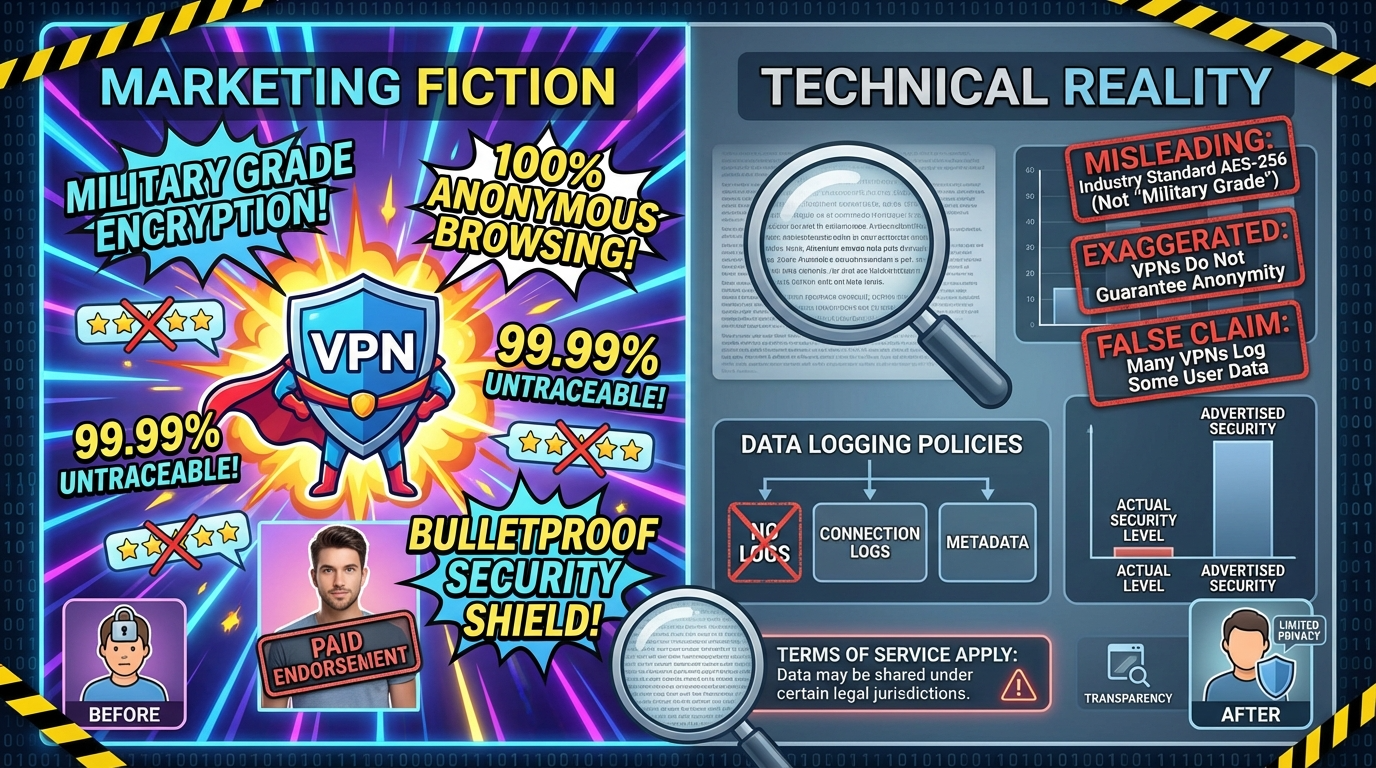
What “dark side vpn marketing” really means
Have you ever seen an ad promising “100% anonymity” or “you’re invisible on the internet!” and thought, “Wow, sign me up”? That right there is often the beginning of what we call the dark side vpn marketing. In simple terms, this phrase describes the shady side of virtual private network (VPN) advertising—promises that overstate what the service can actually deliver, hidden trade-offs, and sometimes a misleading comfort zone that lulls you into a false sense of safety.
When you purchase a VPN, you believe you’re buying protection. But the marketing around many services stretches the truth. According to researchers, a large share of VPN providers make exaggerations or even false claims about what their service does. ETBrandEquity.com+3Consumer Reports+3Tom’s Guide+3 The “dark side” is that while you’re marketed privacy and freedom, the reality can include data sales, weak infrastructure, or unfulfilled promises.
And yes—it matters. Because if you believe the hype, you may ignore real threats. So let’s dive in and shine some light on the tactics, so you don’t become the next victim of misleading VPN marketing.
Common false claims in VPN advertising
The promise of total anonymity
One favourite of the industry: “Be completely anonymous—no one can track you!” Sounds great, right? But in truth, that promise is often exaggerated or outright misleading. According to a review by Consumer Reports, 12 out of 16 tested VPNs made sweeping claims that weren’t supported by their practices. Consumer Reports For example, even with a VPN, you can still be tracked via browser fingerprinting, cookies, device identifiers, or account logins. Tom’s Guide+1 The concept of total anonymity is a myth—yet it’s sold because it resonates.
“Military-grade encryption” and other buzzwords
“Military-grade encryption” sounds authoritative and high-tech. So marketers use it to build trust. But many security experts say it’s mostly jargon without meaningful substance in this context. Consumer Reports+1 It sets an expectation that any VPN using that term is ultra-secure. But the reality: encryption standards may be industry standard (AES-256, etc.), so the phrase is more marketing than meaningful difference. This is a key element of the dark side vpn marketing—big words, little transparency.
Lifetime deals, free offers and hidden trade-offs
Free or lifetime-deal VPNs are appealing. Who doesn’t like “get it once, use it forever”? But digging deeper, there are trade-offs: data logging, slower speeds, limited server access, or even hidden ads. According to one guide, many free VPNs inject ads, log or sell your data, or even carry malware. PrivacySavvy+1 These offers are often used in marketing to pull you in—and then the real story shows up later, once you’re locked in. That’s part of the darker side of VPN marketing: using irresistible offers while burying limitations in small print.
Why these misleading tactics thrive in the VPN industry
Why is the dark side vpn marketing so common? For several reasons:
First, there’s a huge demand. With ever-growing privacy concerns, more people are looking for tools to protect themselves online. The industry is ripe. Marketing pushes hard to capture that audience.
Second, there’s low barrier to entry. Many new VPN services pop up overnight. Regulation is patchy. As one report noted, the industry is “rife with deceptive advertising and abusive data practices.” ETBrandEquity.com+1 When oversight is weak, marketing claims can proliferate unchecked.
Third, affiliate marketing and influencer promotions magnify the problem. Many VPNs pay influencers to hype them, and those influencers may not explain the nuances. For instance, a study found that many YouTube influencer ads for VPNs featured false technical claims or exaggerated security benefits. TechRadar This amplifies the dark side: when trusted voices deliver glossed-over messages, users may act on incomplete or misleading information.
Fourth, the technology itself is complex; users may not have the background to judge claims. So bold statements win even if they exaggerate. The industry thrives on that gap. As one think tank said: “claims made by VPNs that they protect user data have proven too often to be false.” PR Newswire
All these factors combine to create fertile ground for dark side vpn marketing. And the consequences? Users may pay for services that don’t deliver, or worse, feel safe when they aren’t.
Real-world examples of the dark side vpn marketing
Let’s look at real cases where the dark side vpn marketing played out.
Example 1: In Australia, the Australian Competition and Consumer Commission (ACCC) fined Meta Platforms (Facebook’s parent company) AUD 20.4 million for misleading advertising of a “VPN” app called Onavo Protect. It claimed to protect user data and privacy but in fact collected extensive user-data for Meta. Linus Tech Tips That’s a strong example of marketing claiming privacy and protection, while the reality was the opposite.
Example 2: Research into influencer marketing found many YouTube ads for VPNs making full promises of protection (even from governments) which are technically implausible. Many ads used absolute language—“nothing tracks you”, “complete freedom”, etc. That kind of hype is a hallmark of the dark side vpn marketing. TechRadar
Example 3: Independent investigations found that hundreds of VPN services misrepresent their products, sell user data, or claim “no logs” when their terms show otherwise. One report found that the industry is opaque and misleading in many parts. ETBrandEquity.com+1
These examples show that the dark side isn’t just hypothetical—it’s happening. So if you’re reading the marketing of any VPN, you should ask: what’s the real guarantee behind the claim?
How to spot and avoid deceptive VPN marketing
Here are practical ways to avoid falling into the trap of dark side vpn marketing:
- Read the privacy policy: Does the service promise “no logs”? Then verify whether there are independent audits or verifications. If logging is unclear, it’s suspicious.
- Check for realism in claims: If the marketing says “unhackable”, “governments can’t see you”, or “complete anonymity forever”, raise a flag. As experts say, many VPNs exaggerate. Tom’s Guide+1
- Evaluate the company background: Who runs the service? Where is it based? If the provider is opaque or newly created with little reputation, that increases risk.
- Inspect the pricing structure: Free or ultra-cheap lifetime offers may sound great, but ask: how do they make money? If it’s not from subscriptions, it might be from data collection or ads. According to Scam guides: free VPNs may log and sell data. PrivacySavvy+1
- Check independent reviews: Third-party audits or security-research-site findings are valuable. Beware of reviews that look overly promotional (affiliate-driven). Many affiliate sites are owned by the same companies. Tom’s Guide
- Test the service: Many providers offer money-back guarantees. Use them to test speed, reliability, server access, and whether logs or leaks occur (there are free tools online for DNS leaks etc.).
- Avoid absolutes in marketing: Words like “always”, “never”, “totally”, “guaranteed” should make you pause. The safest marketing is clear about limitations.
By applying these steps, you’ll reduce the risk of being misled by the dark side vpn marketing and make a more informed choice.
Building a smarter VPN decision strategy
You’ve now seen how deceptive marketing works in the VPN space and how to spot it. Let’s build a strategy for making a good VPN decision:
Step 1: Define your real needs
Ask yourself: Why do I need a VPN? Streaming geo-blocked content? Protecting data on public WiFi? Accessing work remotely? Your needs determine the service you should get.
Step 2: Prioritize transparency and trust
Choose providers with independent audits, clear logging policies, and known reputation. Avoid those making wild claims without evidence.
Step 3: Test before committing
Take advantage of trial periods or money-back guarantees. Measure speed, check for leaks, validate server count, and test cancellation policies (many users report difficulty canceling subscriptions). Consumer Reports
Step 4: Recognize marketing versus reality
When reading a VPN’s website, ask: is this claim backed by proof? For instance, “military-grade encryption” is marketing. “AES-256 encryption, regularly audited by xyz, no logs policy proved by audit” is more concrete.
Step 5: Budget realistically
Be aware that good services cost money because infrastructure, security, servers cost money. If it’s extremely cheap (or free), ask what they’re giving up. If lifetime deal at ultra-low cost, that might mean they’re monetizing you elsewhere.
Step 6: Reevaluate periodically
The VPN market changes fast. New services pop up, audits get outdated, regulations change. So every year or so, reassess whether your provider still meets your needs.
By following this decision strategy, you avoid being lured by the darkest side of VPN marketing and instead become an informed, empowered user.
Conclusion
The world of VPNs holds real value: privacy, access, security—but only when used with proper understanding. The dark side vpn marketing reveals a less pleasant truth: heavy-handed promises, exaggerated claims, hidden costs, and even data misuse. When ads tell you “unlimited freedom,” ask yourself: freedom from what? And how?
Don’t let marketing slogans dictate your choices. Instead, base your decision on transparency, real needs, independent verification, and realistic expectations. The best protection you gain is not simply from the VPN service—but from your own vigilance. Stay aware. Pick smart. Connect safely.
FAQs
- What does “dark side VPN marketing” refer to?
It refers to misleading, exaggerated or false advertising by VPN providers that overstate benefits like total anonymity or unbreakable security. - Are all VPN marketing claims false?
No. Many VPNs are legitimate. But many claims—especially those using absolute terms or buzzwords—should be viewed skeptically and verified via independent evidence. - How can I tell if a VPN is exaggerating its claims?
Check the privacy policy, look for independent audits, review realistic wording (not “always anonymous”), test the service, and read third-party reviews rather than only marketing materials. - Is a free VPN always a red flag?
Not always, but free VPNs often come with trade-offs: logging, limited servers, ads, or worse. If the business model isn’t clear, it’s wise to proceed with caution. - What’s the best way to choose a trustworthy VPN?
Start by defining your needs. Then pick a provider with transparency, audit reports, good reputation, fair price, realistic claims, and trial options. Avoid those with vague promises or aggressive lifetime deals.